In This Article
For the better part of a decade, wellness culture told a fairly consistent story: track it, and you can fix it. Sleep scores, HRV readings, glucose monitors, step counts, recovery metrics, an entire industry rose up around the promise that enough data would finally hand you the answer to how you should actually feel. In 2026, something genuinely different is happening. The fastest-growing trend in wellness right now isn't a new device. It's people quietly putting the devices down.
The rise of the quantified self, and its quiet cost
The instinct behind self-tracking was never unreasonable. Data can be genuinely useful, catching a pattern you'd otherwise miss, motivating a habit that needed motivating, offering real insight where guesswork once lived. For a while, it worked exactly as promised for a lot of people.
But something started to shift as the trackers multiplied. A ring on your finger, an app on your phone, a monitor on your arm, all quietly reporting back, all quietly asking to be checked. What began as insight, for many people, slowly curdled into surveillance, a running tally of a body being graded, daily, on metrics it never agreed to be measured by.
Analysis paralysis: when data creates more anxiety than clarity
Therapists have started naming something specific: data-driven wellness can tip, almost invisibly, from motivation into fixation. A single bad sleep score can sour an entire morning that would otherwise have felt fine. A missed step count can turn an easy, restorative day into one quietly laced with guilt. The body, which used to simply tell you how it felt, has to compete now with a screen insisting it knows better.
This is the real, underdiscussed cost of over-optimization: it's not that the data is wrong, exactly. It's that a body constantly being measured starts to lose confidence in its own signals, deferring to the number instead of the feeling, the dashboard instead of the instinct.
What "trusting your body" actually means
This isn't a rejection of science, and it isn't nostalgia for ignorance. It's a recalibration, a shift from optimization toward something more human: regulation over results, sensation over scores, wellbeing measured by how alive you actually feel rather than what a graph says you should feel.
Your body has always been giving you information. Fatigue, hunger, restlessness, ease, these are not primitive signals waiting to be replaced by better data. They are the original data, and for most of human history, they were the only instrument anyone had, and they were enough.
The return of sensation over scores
Practically, this shift is showing up everywhere: a move toward simpler, gentler routines instead of exhaustive ones. A return to communal, low-tech rituals, social saunas, group walks, shared meals, that offer real regulation without a single readout. A growing willingness to rest simply because you feel tired, not because an app gave you permission to.
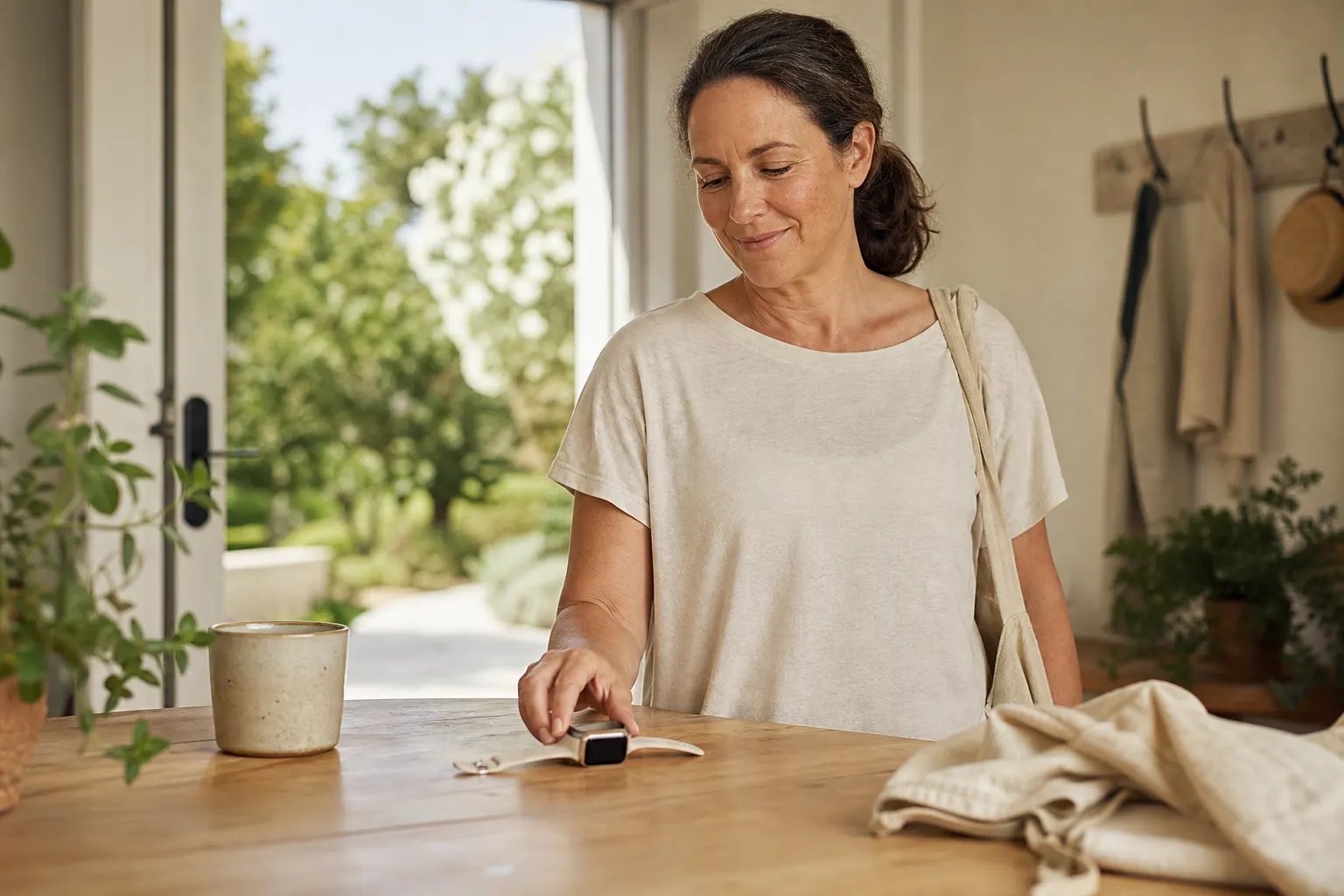
None of this requires abandoning every tool you've found genuinely useful. It requires asking a slightly different question: is this tool helping me hear my body more clearly, or is it slowly teaching me to stop listening to it at all?
How to actually try this
- Pick one metric to let go of first. Not everything at once, just the single number that tends to hijack your mood the fastest.
- Notice your body before you check the data. A few seconds of "how do I actually feel right now" before glancing at a screen, restoring the original order of operations.
- Let rest be self-evident sometimes. You are allowed to nap, slow down, or take a day off simply because you want to, without a recovery score's blessing.
- Choose one low-tech, communal ritual. A shared meal, a walk with a friend, a sauna, something that regulates your nervous system through connection rather than data.
Where tracking still genuinely belongs
None of this is an argument that tracking has no place. For specific medical conditions, real training goals, or genuine curiosity, data can still be a useful, legitimate tool. The shift worth making isn't total abandonment. It's making sure the tool stays a tool, one voice offering input, rather than the only voice you trust anymore.
The most radical act of self-care in 2026 might simply be this: closing the app, and asking your own body the question first.
Ready to start your glow era?
Grab your copy of Glow Era by Prudence Nteo and begin your own journey back to yourself.
Read the Book