In This Article
There is a particular kind of guilt that builds around exercise, the sense that if you didn't get a full hour in, it somehow didn't count. A missed gym session becomes a missed day. A busy week without a "real workout" quietly turns into evidence against yourself. This year, a quieter, more forgiving idea is gaining real traction: the movement snack, small, frequent bursts of activity scattered through your day, and the growing evidence that they may matter just as much as, sometimes more than, one long session ever could.
What a movement snack actually is
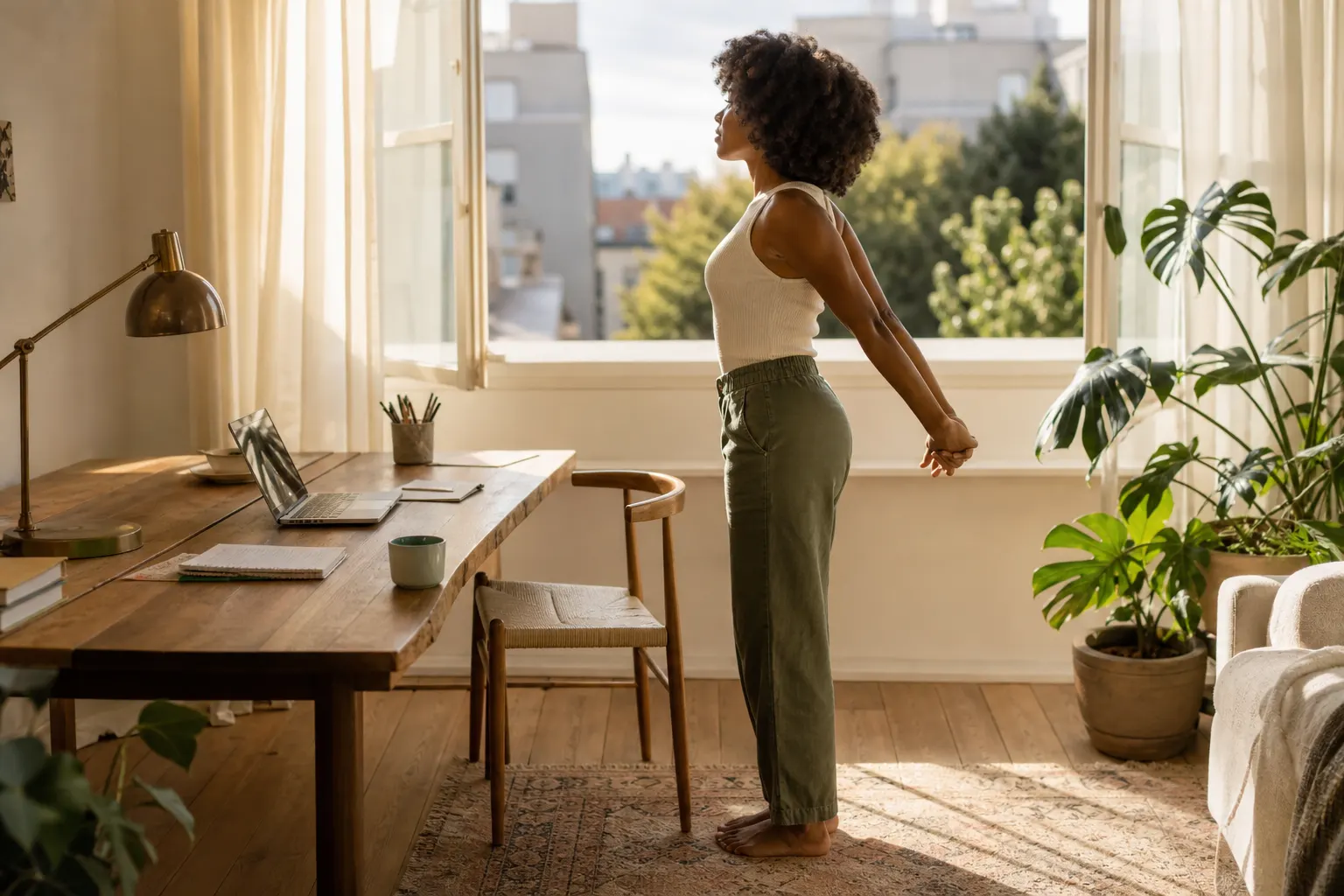
The concept is refreshingly simple. Instead of one continuous block of exercise, a movement snack is a short burst, a flight of stairs, two minutes of stretching, a brisk walk to the end of the street and back, dropped into the ordinary flow of your day rather than scheduled around it. No gym bag required. No real interruption to your day. Just movement, in small, repeated doses.
For anyone whose days are dominated by a desk, a screen, or long stretches of sitting, and that's most of us, this offers something a single workout genuinely can't: it interrupts the sitting itself, throughout the day, rather than trying to compensate for it after the fact.
Why scattered movement may beat one long session
Here's the part that tends to surprise people: an hour of exercise doesn't fully undo the effects of sitting still for the other twenty-three. Prolonged, uninterrupted sitting has its own distinct physiological cost, on blood sugar regulation, circulation, and joint stiffness, largely independent of whether you exercised earlier that day.
Breaking up sitting with brief, frequent movement appears to address this more directly than one long session can. Even two or three minutes of light activity every half hour or so can measurably improve blood sugar response and circulation compared to the same total sitting time left uninterrupted, even when the total minutes of movement across the day are identical either way.
The science of breaking up sitting
The body seems to respond less to how much you moved in total, and more to how often you interrupted stillness. A single, intense hour followed by hours of stillness is a genuinely different physiological experience than the same amount of movement spread across a full day in small pieces. Muscles that would otherwise sit dormant for hours get periodic activation. Circulation gets nudged along regularly, rather than once and then left to its own devices.
This isn't an argument against traditional workouts, longer, structured exercise still offers real, distinct benefits, cardiovascular conditioning, strength building, endurance. It's an argument for adding something alongside it, especially on the days a full workout simply isn't happening.
What this looks like in an ordinary day
- A few flights of stairs, taken deliberately rather than avoided, several times throughout the day
- A two-minute stretch break between meetings or tasks, especially after long stretches of sitting
- A short walk after meals, even just to the end of the block and back
- Standing up and moving during phone calls, instead of staying seated for the whole conversation
- A handful of bodyweight movements, squats, calf raises, gentle stretches, done while waiting for the kettle to boil or your coffee to brew
None of this requires special clothing, a plan, or a block of scheduled time. That's rather the entire point.
Making it stick
The real appeal of movement snacks isn't just physiological, it's psychological. A two-minute stretch doesn't require motivation the way an hour at the gym does. There's no mental negotiation, no dread, no need to "find the energy." It's simply small enough to just do, which is precisely why it tends to actually happen, day after day, in a way a bigger commitment sometimes doesn't.
You don't need to overhaul your relationship with movement to feel better in your body. You need permission to let it be smaller, more frequent, and far less dramatic than you've been taught to believe it has to be. The stairs are right there. The two minutes are already yours.
Ready to start your glow era?
Grab your copy of Glow Era by Prudence Nteo and begin your own journey back to yourself.
Read the Book