In This Article
There is a version of glow that has nothing to do with what's in your skincare cabinet. It shows up in the color of your plate, the steadiness of your energy through a long afternoon, the difference between snapping at someone you love and simply, calmly, saying what you need. What you eat is quietly, constantly, writing itself onto your body and your mood, whether or not you're paying attention.
A note before we begin
We are not doctors or registered dietitians, and this article is general wellness information, not medical or nutritional advice tailored to you. If you have specific health conditions, allergies, or dietary needs, please consult a healthcare provider or registered dietitian before making significant changes to how you eat.
Why fruits and vegetables show up on your skin before anywhere else
Produce is doing more than filling space on your plate. Colorful fruits and vegetables are dense with antioxidants, compounds that help the body manage oxidative stress, the kind of cellular wear and tear that shows up, visibly, as dullness, fine lines, and a certain tiredness in the complexion that no amount of concealer quite corrects.
Vitamin C, abundant in citrus, berries, and peppers, plays a direct role in collagen production, the structural protein responsible for skin's firmness and bounce. Beta-carotene, found in carrots, sweet potatoes, and leafy greens, converts to vitamin A in the body and supports skin cell turnover. None of this is marketing language. It's simply what these foods are already doing, quietly, every time you eat them.
The mood connection: gut, blood sugar, and steadier days
The gut and the brain are in constant conversation, and a diet rich in fiber-heavy fruits and vegetables feeds the gut bacteria most associated with producing neurotransmitters like serotonin, a huge portion of which is actually produced in the gut rather than the brain itself. A well-fed gut microbiome is increasingly understood to be one of the quieter architects of a stable mood.
Fruits and vegetables also help regulate blood sugar, particularly when paired with fiber and protein rather than eaten in isolation. Blood sugar spikes and crashes are a well-documented driver of irritability, sudden fatigue, and the kind of afternoon mood dip that has nothing to do with your circumstances and everything to do with your last meal. A plate built around steady, produce-forward eating tends to produce steadier moods, not as a coincidence, but as a fairly direct physiological relationship.
Where steak fits into the picture
It might seem like an unlikely pairing alongside kale and berries, but protein, and red meat specifically, plays its own meaningful role in this picture, one that's easy to overlook in a wellness conversation that often centers produce alone.
Iron is essential for carrying oxygen through the body, and low iron is a well-established cause of fatigue, brain fog, and low mood, often mistaken for something purely psychological. Steak is one of the most bioavailable sources of iron available, meaning the body absorbs it more efficiently than iron from plant sources.
Vitamin B12, found almost exclusively in animal products, is essential for nervous system function and energy production. A deficiency can produce symptoms that look remarkably like anxiety or depression, tiredness, irritability, difficulty concentrating, before anyone thinks to check a blood panel.
Protein itself provides the amino acid building blocks for neurotransmitters, including the precursors to dopamine and serotonin. A plate with adequate protein tends to produce more stable energy and mood than one relying primarily on carbohydrates alone.
None of this is an argument that everyone needs red meat specifically, plenty of people thrive on plant-based sources of these same nutrients, with appropriate attention to iron and B12 intake. It's simply an argument for taking protein, in whatever form suits you, as seriously as you take your vegetables.
Building a plate that supports glow, energy, and mood
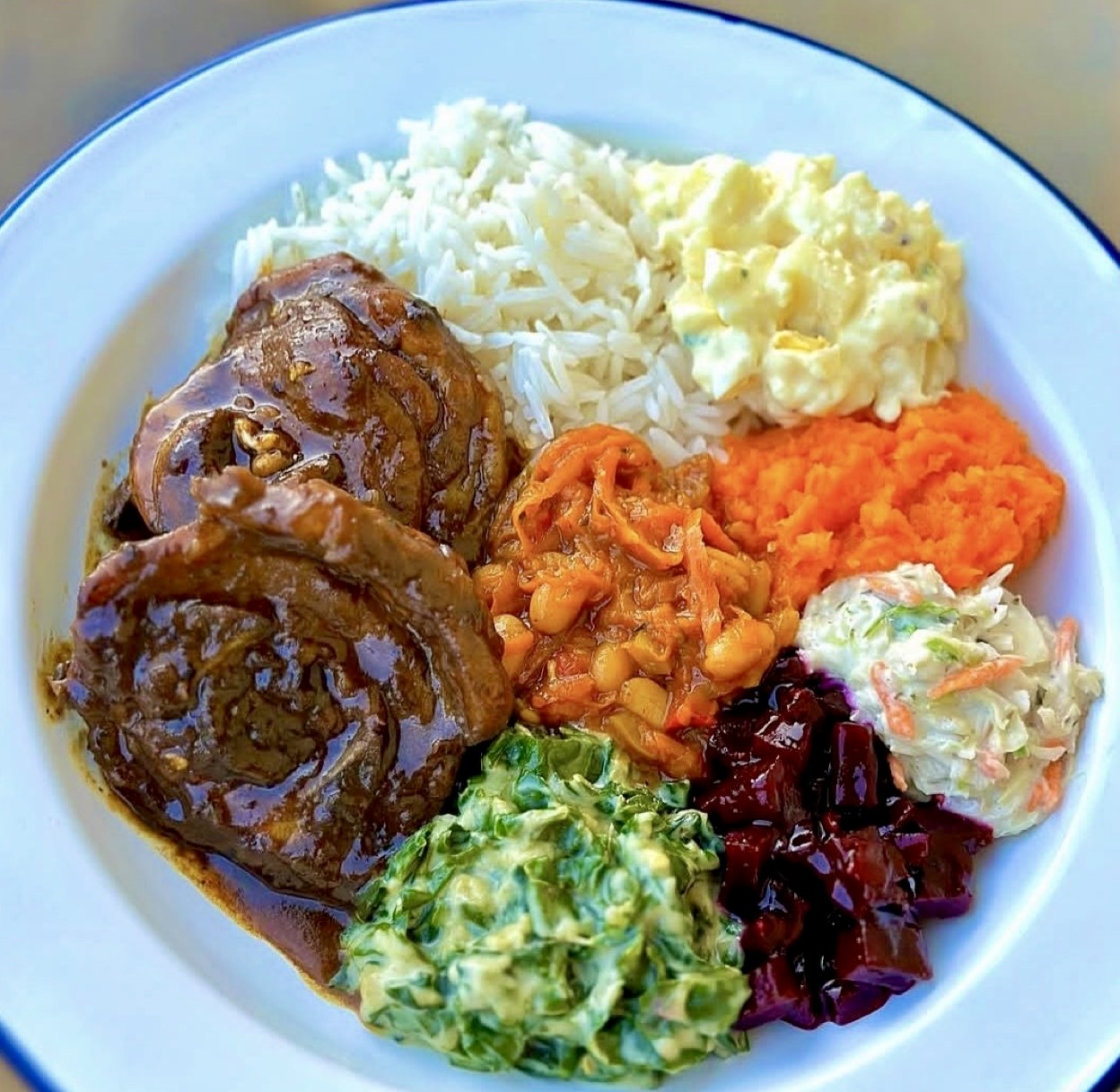
- Fill half your plate with color. Different pigments in produce, the deep red of berries, the orange of sweet potato, the green of spinach, indicate different antioxidant compounds. Variety matters more than any single "superfood."
- Pair produce with protein. A salad with grilled steak, salmon, or chickpeas holds your blood sugar steadier than the same salad alone.
- Don't fear the fat. Healthy fats from olive oil, avocado, and yes, the marbling in a well-sourced steak, help you actually absorb the fat-soluble vitamins (A, D, E, K) present in your vegetables.
- Eat the rainbow across the week, not just the day. Consistency over time matters more than any single perfect plate.
A few notes on balance
Quality and portion matter as much as the food group itself. A well-sourced, moderate portion of steak, alongside a generous helping of vegetables, looks very different, nutritionally and otherwise, from a diet heavy in processed meats or oversized portions with little produce at all. As with most things in a glow era, the goal isn't perfection or rigid rules. It's building a plate, most days, that actually gives your body what it needs to show up steadily, for your skin, your energy, and your mood alike.
The glow you're after was never only about what you put on your face. It's also, quite literally, what you put on your fork.
Ready to start your glow era?
Grab your copy of Glow Era by Prudence Nteo and begin your own journey back to yourself.
Read the Book