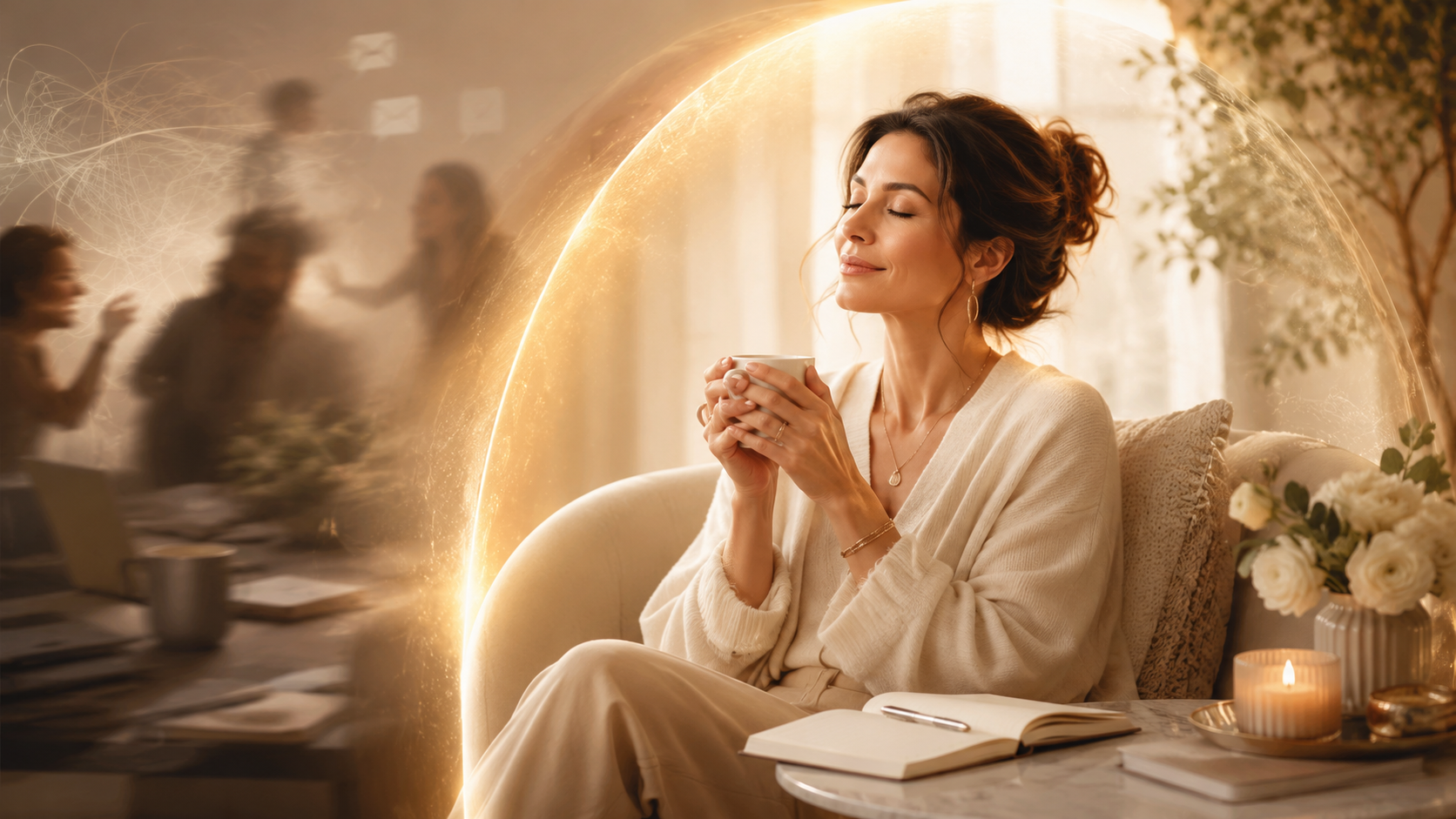
In the quiet moments when anxiety rises like a tide, tight chest, racing thoughts, the urge to people-please or overcommit, many of us discover a deeper truth: our peace is often eroded not by the world itself, but by the invisible lines we've allowed to blur. Creating boundaries isn't about building walls or becoming selfish. It's an act of profound self-love, a gentle yet firm way of saying, "My energy, time, and emotional well-being matter." And when we honor those limits, anxiety often softens, making space for the calm, confident glow that is already within us.
This is the heart of the Glow Era: coming home to yourself through sustainable practices that protect what is sacred. Boundaries and anxiety are deeply intertwined. Weak or nonexistent boundaries leave us overextended, resentful, and depleted, fertile ground for worry. Healthy boundaries, on the other hand, create safety, clarity, and the emotional breathing room our nervous systems crave.
Understanding the Connection Between Boundaries and Anxiety
Anxiety frequently signals that something is out of alignment. When we say yes to requests that drain us, stay silent about our needs, or absorb others' emotions as our own, our body responds with tension. Cortisol rises. Sleep suffers. The mind loops on "what ifs."
Boundaries act as a regulator. They define where you end and another begins, emotionally, physically, digitally, and energetically. By clarifying what you will and will not accept, you reduce uncertainty and the constant negotiation that fuels anxious thoughts. Research and lived experience both show that people who practice clear, compassionate boundaries report lower stress levels and greater emotional resilience. It's not about controlling others; it's about stewarding your own inner world with kindness.
Why Boundaries Feel Hard (and Why They're Worth It)
Many of us were taught that being "nice" means being available without limits. Guilt, fear of rejection, or the habit of over-giving can make boundary-setting feel terrifying at first. Anxiety may spike as we practice: will they be angry? Will I lose the relationship?
These feelings are normal. They are the old patterns releasing. The more we practice, the more our nervous system learns that safety comes from self-trust, not from endless accommodation. Over time, the anxiety of setting a boundary becomes far smaller than the chronic anxiety of living without them.
Practical Ways to Create Boundaries That Support Calm
Start small and stay consistent. Boundaries work best when they are clear, kind, and practiced regularly.
Identify your non-negotiables. Reflect gently: what consistently leaves you depleted or anxious? Late-night work emails, emotional dumping without reciprocity, overcommitting social plans. Write them down. Awareness is the first loving step.
Use clear, compassionate language. Practice phrases that feel true to you, like "I can't take that on right now, but I hope it goes well," or "I need some quiet time this evening to recharge," or "I'm not available to discuss this topic; it feels too heavy for me today." You don't need long explanations. Brevity protects energy.
Set digital and time boundaries. Anxiety thrives in constant availability. Turn off non-essential notifications. Designate phone-free hours or a "no work after 7 p.m." rule. Protect your mornings or evenings as sacred recovery time.
Honor emotional boundaries. You are not responsible for managing everyone else's feelings. When someone is upset by your limit, you can acknowledge their emotion without absorbing it or abandoning your need: "I hear that this is disappointing for you, and I still need to honor this boundary."
Practice the pause. When a request comes in and anxiety flares, pause. Breathe. Ask yourself: does this align with my capacity and values right now? A simple "let me check and get back to you" buys time and prevents reactive people-pleasing.
Pairing Boundaries with Anxiety-Soothing Practices
Boundaries create the container; daily rituals fill it with calm.
Breath and body awareness: when anxiety rises after setting a boundary, or before, try a short grounding practice, five slow breaths, feeling your feet on the floor, or a gentle body scan. This signals safety to your nervous system.
Journaling for clarity: after interactions that felt boundary-testing, write what happened, how it felt, and what you might do differently next time. This turns anxiety into insight.
Protective rituals: create a simple evening wind-down that reinforces your limits, dim lights, herbal tea, a few pages of a nourishing book, or quiet reflection. These habits remind your body that rest is allowed.
Self-compassion over perfection: boundary-setting is a practice, not a performance. Some days will feel messy. Meet yourself with the same kindness you would offer a dear friend.
Common Pitfalls and Gentle Course Corrections
It's easy to swing from no boundaries to rigid ones, or to set them only when exhausted. Notice if guilt creeps in and softens your resolve. Guilt is often just old conditioning, not a reliable guide. Also watch for over-explaining, your needs are valid without a dissertation.
If anxiety feels overwhelming or persistent, professional support such as therapy or counseling can be a powerful companion on this path. Boundaries work best alongside tools that address deeper roots of anxiety.
Your Invitation to Glow
Creating boundaries is one of the purest forms of self-care. Every time you protect your energy, you tell your nervous system, "You are safe here." Anxiety loosens its grip. Confidence grows. The glow that comes from living in alignment becomes steadier and more radiant.
You don't have to overhaul everything today. Choose one small boundary, perhaps declining one extra request this week, or claiming ten quiet minutes each morning, and practice it with compassion. Notice how your body responds. Celebrate the shift.
Your Glow Era is already unfolding. Boundaries are simply the gentle fences that let your inner light shine without being dimmed by the world's demands. You are allowed to protect your peace. You are allowed to come home to yourself.
Disclaimer: We are not healthcare professionals. We share only our personal experiences and perspectives. Please consult qualified healthcare providers for any medical advice or concerns regarding anxiety or mental health.
Ready to start your glow era?
Grab your copy of Glow Era by Prudence Nteo and begin your own journey back to yourself.
Read the Book